Pet resume for landlords
Pet Resume for a Landlord: What to Include + Example
A landlord who allows pets may still want to know more about your dog before approving your rental application. A pet resume puts the most useful information in one place: your dog's basic details, health and vaccination records, training, temperament, rental history, references and care routine.
A good pet resume doesn't guarantee approval. It makes it easier for a landlord or property manager to understand who your pet is and how you care for them.
Why it helps
Why would a landlord want a pet resume?
Even when a property is pet-friendly, a landlord may still have practical questions about an individual animal.
A pet resume anticipates these questions and gives the landlord an organized document they can review along with your rental application.
- Is the dog vaccinated and licensed?Health record
- How large is the dog, and what breed or mix?Profile
- Is the dog trained?Training
- Has the dog lived successfully in a rental before?Rental history
- How does the dog behave around people and other animals?Temperament
- Who cares for the dog while the owner is away?Care plan
- Can a previous landlord, trainer or vet vouch for the dog?References
- Does the renter carry liability or renters insurance?Care plan
Checklist
What should you include in a pet resume?
Eight sections cover what most landlords and property managers want to know. Keep each one short.
Pet profile
Name, age, breed or mix, weight, and a clear recent photo. Add the microchip and city license numbers if you have them.
Health information
Vaccination dates and when each expires, flea, tick and heartworm prevention, your vet's name and phone, and licensing.
Training
House-training, crate training, leash manners, and any classes or certificates, such as the AKC Canine Good Citizen.
Temperament
A short, honest picture of energy indoors, barking, and how your dog does with strangers, other dogs, children and time alone.
Rental history
Where your dog has lived before, for how long, and how the unit was left. This is where a former landlord's reference helps most.
References
A previous landlord, trainer, daycare, vet, pet sitter or neighbor who knows your dog, with a short quote and a phone number.
Daily care plan
Exercise routine, who looks after your dog on long workdays, waste pickup, an emergency contact and your liability insurance.
A personal note
A few sentences in your own words introducing your dog and how you'll look after them in the landlord's building.
Example
Pet resume example
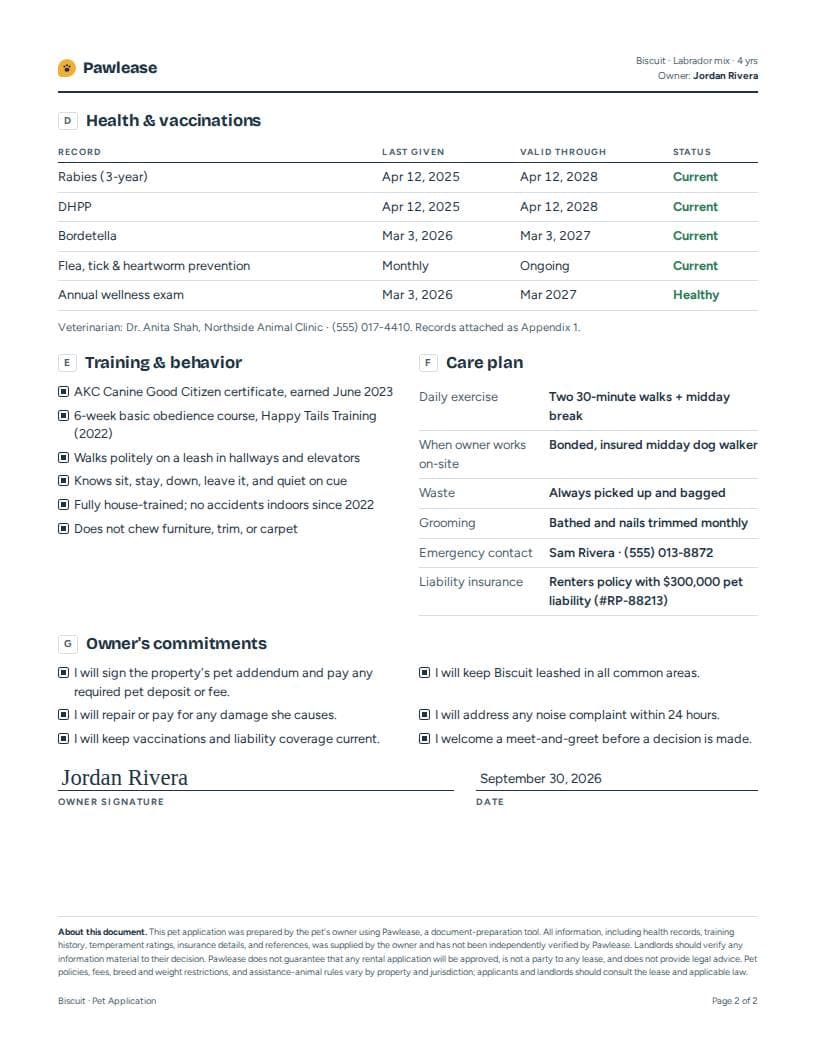
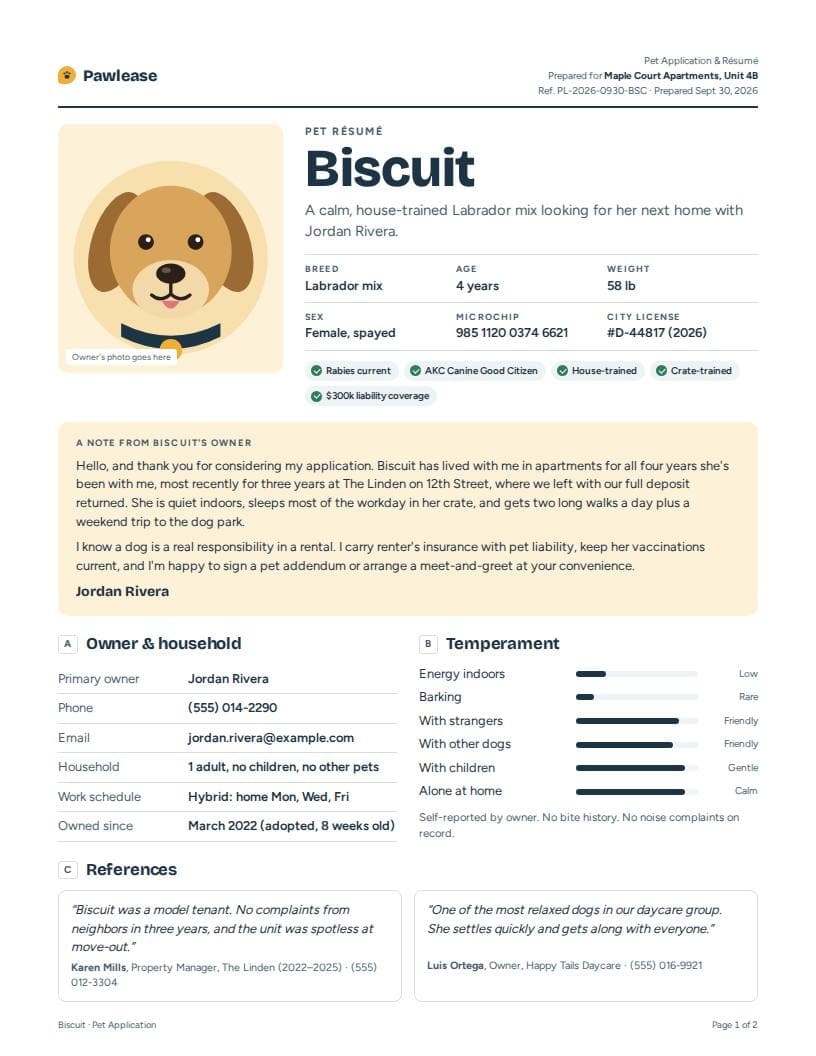
Here's how that information comes together in a finished pet resume, for Biscuit, a four-year-old Labrador mix.
A Pawlease pet resume organizes this information into a clean two-page PDF you can attach to a rental application, email to a property manager or bring to a showing.
Tips
How to make your pet resume more useful to a landlord
Be specific.“House-trained for five years” tells a landlord more than “well behaved.”
Be honest.Don't leave out anything that could come up later in the application. A realistic picture earns more trust than a perfect one.
Include a good photo.Choose a clear, friendly photo that accurately represents your dog. Calm and well lit beats cute.
Use references when you have them.A previous landlord who can confirm your dog lived well in a rental is the strongest reference you can add.
Make it easy to read.A landlord should be able to find the important facts in a minute or two, not dig through pages of notes.
Offer a meet-and-greet.Close your note by offering to bring your dog by. Nothing reassures a landlord like meeting a calm, friendly dog in person.
Pawlease
Do I need to make the pet resume myself?
No. You can write one yourself using the checklist above, or Pawlease can guide you through it. Answer straightforward questions about your dog, household, health records, training, temperament, care routine and references, and Pawlease organizes your answers into a polished pet resume that's easy for a landlord to review.
Tell us about your dog
Name, breed, size, a favorite photo, and the basics about you and your household.
Answer the questionnaire
Vaccines, training, temperament, daily routine and references, with tips on what landlords look for.
Preview and download
Watch your pet resume fill in as you go, then download the two-page PDF. See pricing.
Questions
Pet resume questions
What is a pet resume for a landlord?
A short document, usually one or two pages, that introduces your dog to a landlord or property manager: profile and photo, health and vaccinations, training, temperament, rental history, references, a care plan and a note from you. You send it with your rental application.
Does a pet resume guarantee that my dog will be accepted?
No. Landlords decide based on their own policies, insurance, building rules and local law. A pet resume makes it easier for them to understand your dog and how you care for them, but the decision is theirs.
What should I include in a dog resume?
The pet profile, health and vaccination information, training, temperament, rental history, references, a daily care plan and a short personal note. The checklist above covers what goes in each section.
Should I include vaccination records?
Yes. Vaccination status is one of the first things landlords ask about. List each vaccine with the date given and when it expires, and offer to share or attach the vet records so the landlord can check them.
Who can be a pet reference?
A previous landlord or property manager is the most useful. A trainer, doggy daycare, veterinarian, pet sitter or neighbor who knows your dog also helps. Only quote someone who said it or agreed to it. Our pet reference letter guide has a template you can send them.
Should I include a photo of my dog?
Yes. A clear, friendly photo helps a landlord picture your dog. Pick a recent one that's well lit and shows your dog calmly, rather than a costume or action shot.
Can I make a pet resume myself?
Yes. You can write one using the checklist on this page. Pawlease is an easier way to get a finished, well-organized PDF: you answer plain questions and it lays out the pages for you.
Is a pet resume the same as an assistance-animal accommodation request?
No. A Pawlease pet resume is a document-preparation tool for ordinary rental applications involving pets. It isn't legal advice, and it isn't a substitute for any process that may apply to service or assistance animals, which are covered by different rules. If that applies to you, talk to a qualified attorney or a local tenant resource center.
More help: pet resume template checklist · pet reference letter template · “pets considered” apartments
Put your dog's best paw forward.
Give your landlord the information they want in one professional, easy-to-read pet resume.